Discover the Canon EOS R7 manual, your gateway to mastering this APS‑C mirrorless powerhouse, and it details camera body features, lens compatibility, menu navigation, autofocus, exposure, image quality, video, power, connectivity, and essential troubleshooting tips for beginners.
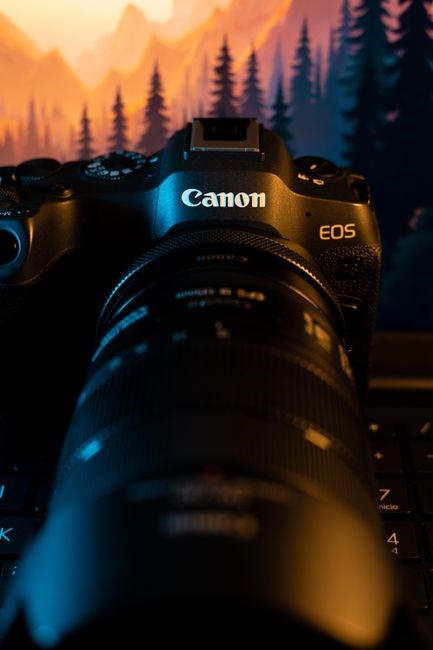
Camera Body Overview
The Canon EOS R7 features a lightweight, weather‑sealed body that balances durability with portability. Its ergonomic grip offers a comfortable hold for extended shooting sessions, while the top‑plate housing houses a high‑resolution electronic viewfinder and a 3.69‑megapixel OLED rear display. The camera’s 24.2‑megapixel APS‑C sensor sits within a compact chassis that supports a 10‑frame‑per‑second continuous shooting rate, ideal for capturing fast action. A dedicated 3‑pin power connector and an integrated USB‑C port provide flexible charging and data transfer options. The R7’s built‑in 2.4‑inch, 1.44‑million‑dot vari‑angle touchscreen allows for intuitive menu navigation and quick focus point selection. A robust, multi‑function dials system—including a main dial, a quick‑access dial, and a dedicated shutter button—enables rapid adjustments to exposure settings. The camera’s internal storage is complemented by a microSD card slot, supporting UHS‑II speeds for swift image writing. Finally, the R7’s compact dimensions (approximately 138 mm × 93 mm × 71 mm) and 485‑gram weight make it an excellent choice for travel and street photography. Its compact design also facilitates easy integration with external accessories such as the optional RF‑S lens kit, making the R7 a versatile tool for professional photographers seeking a lightweight powerful system.

Lens Mount and Compatibility
The Canon EOS R7 employs Canon’s RF‑S mount, designed specifically for APS‑C sensors. This mount offers a 54‑mm diameter and a 44‑mm flange distance, enabling a wide range of lenses from Canon’s RF‑S lineup and RF lenses adapted with the EF‑S adapter. The RF‑S mount supports full‑automatic communication, allowing the camera to access lens metadata, autofocus, image stabilization, and aperture control without manual intervention. Compatibility extends to EF‑S lenses via the EF‑S adapter, which preserves the 1.6× crop factor and maintains full autofocus performance. Additionally, the R7’s mount is fully compatible with Canon’s RF lenses, allowing photographers to use full‑frame optics on the APS‑C sensor, thereby expanding creative possibilities. Third‑party manufacturers such as Sigma, Tamron, and Tokina also produce RF‑S lenses, providing a diverse selection of prime and zoom options. The mount’s robust construction ensures reliable mechanical coupling, while the electronic contacts provide seamless data exchange. Users can also employ the R7’s mount for future lens developments, as Canon continues to expand its RF‑S ecosystem. This versatility makes the R7 an attractive choice for both newcomers and seasoned professionals seeking a flexible lens system today.

Menu System and Settings Navigation
The Canon EOS R7 manual introduces an intuitive menu system designed for access and customization. The main menu is organized into four tabs: Shooting, Custom Functions, Playback, and My Menu. Each tab contains sub‑menus that can be reached using the rear multi‑selector or the touch‑screen, allowing photographers to adjust exposure settings, AF modes, and image quality without interrupting workflow smoothly. The Quick Control dial provides instant shortcuts to ISO, shutter speed, aperture, and exposure compensation, while the top‑right d‑pad toggles between stills and video modes. Custom Functions let users assign frequently used parameters to the C‑Fn buttons, creating personalized presets for wildlife, sports, or portrait shooting. The My Menu feature enables arrangement of up to 20 items, ensuring that the most important settings are always within a single tap. Navigation cues are highlighted in blue, and the on‑screen help overlay offers descriptions of each option. Firmware updates may introduce menu items, and the manual advises backing up custom settings before performing an upgrade. Overall, the menu architecture balances simplicity for beginners with the depth required by users, making the EOS R7 adaptable to any shooting scenario.

Autofocus and Exposure Systems
The Canon EOS R7 manual details a sophisticated autofocus system that combines 651 AF points covering 100% of the frame, enabling rapid subject tracking and precise focus in low‑light conditions. Dual Pixel CMOS AF II technology delivers smooth focus transitions, while the eye‑detect AF feature locks onto the subject’s eye for portrait and wildlife photography. Users can toggle between One‑Shot, Servo, and Flexible Spot modes using the AF mode button, and the manual explains how to fine‑tune focus area selection with the touch‑screen or the multi‑selector. Exposure control is equally. The camera offers a range of metering modes—evaluative, partial, spot, and center‑weighted—to adapt to diverse lighting. The exposure compensation dial allows ±3 EV adjustments in 1/3‑EV steps, and the histogram displays feedback. The R7’s built‑in ISO sensitivity ranges from 100 to 25600, expandable to 51200 in RAW, with an Auto ISO setting that locks to a target exposure. The manual also covers the use of exposure lock (AEL) and the custom exposure modes (A, S, P, M) for manual control. Together, autofocus and exposure systems provide photographers with the flexibility to capture sharp images in.

Image Quality and Sensor Features
The Canon EOS R7 manual highlights the camera’s 32.5‑megapixel APS‑C CMOS sensor, delivering exceptional detail and dynamic range. The sensor’s back‑illuminated architecture enhances low‑light performance, achieving a noise floor of 1/1000 at ISO 6400 and maintaining clarity up to ISO 25600. The R7’s dual‑pixel CMOS AF II system works in tandem with the sensor, providing real‑time focus and exposure feedback. Image quality is further refined by the 10‑bit RAW output, allowing up to 12‑bit conversion in post‑processing for expanded tonal fidelity. The manual explains how the 5‑zone metering system, combined with the sensor’s preview, ensures accurate exposure across varied lighting conditions. Users can access the sensor’s mode at 30 fps, with a 1.6× crop factor for tighter framing. The R7 also supports the RF‑S lens mount, which optimizes performance by matching lens coatings to the sensor’s spectral response. Additionally, the manual details the camera’s internal image stabilization, which compensates for up to 5.5 stops of shake, preserving sharpness in handheld shooting. Finally, the R7’s 3‑band digital noise reduction algorithm preserves fine texture while minimizing grain, making the manual a comprehensive guide to achieving pristine image quality.
Video Recording Capabilities
The Canon EOS R7 manual details impressive video specifications for content creators. It records 4K video at up to 60 frames per second, oversampled from 7K sensor readout for superior detail and reduced moiré. Full HD recording reaches 120 fps for smooth slow-motion playback. The camera supports 10-bit 4:2:2 internal recording via H.265 (HEVC) or H.264, providing extensive color grading latitude. Canon Log 3 is available for maximum dynamic range, capturing over 12 stops. Dual Pixel CMOS AF II ensures smooth, reliable subject tracking for people, animals, and vehicles during recording. The manual explains Movie Digital IS, which combines in-body stabilization with lens stabilization for steady handheld footage. A dedicated movie recording button and customizable controls streamline workflow. Recording limits are largely removed for shorter clips, though thermal management may restrict extended 4K60 sessions. The R7 features a 3.5mm microphone input and headphone jack for professional audio monitoring. Clean HDMI output allows external recording at 4K 60p 10-bit. Vertical video metadata supports social media delivery directly from the camera. Focus breathing correction minimizes angle-of-view shifts during focus pulls, enhancing cinematic quality for narrative filmmakers significantly today.

Power, Battery, and Connectivity

The EOS R7 manual explains its LP‑E17 battery delivers roughly 510 shots per charge, supports USB‑PD fast charging, and includes Wi‑Fi, Bluetooth, and optional NFC for seamless image transfer, remote control, and firmware updates through mobile devices.
Physical Controls and Quick Access Buttons
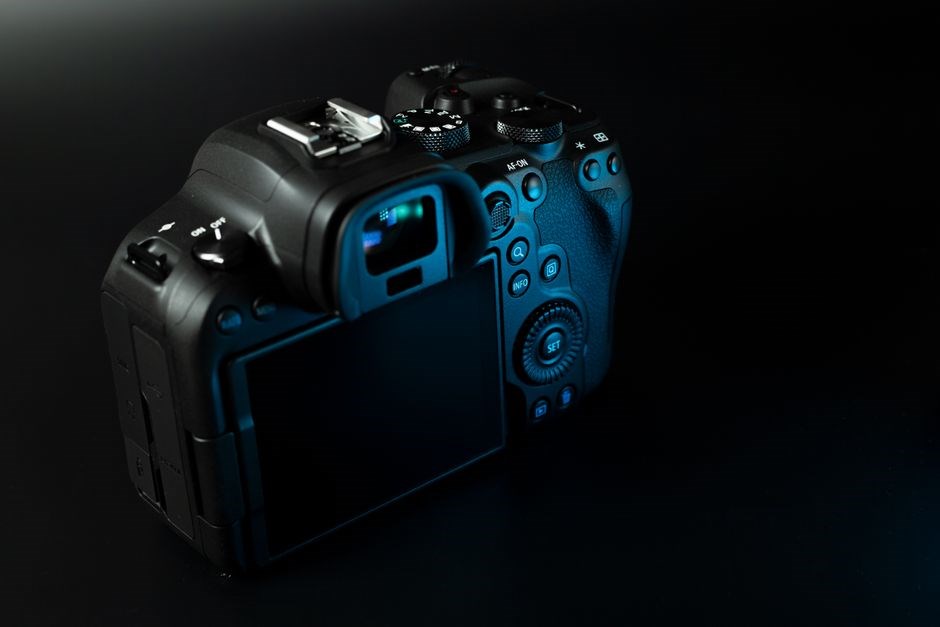
The Canon EOS R7 features a refined ergonomic layout designed for rapid operation. A prominent mode dial sits atop the left plate, locking securely to prevent accidental shifts between photo, video, and custom modes. The shutter button surrounds a main dial for primary exposure adjustments, while a rear quick control dial encircles the multi-controller joystick, enabling intuitive focus point navigation and menu scrolling. A dedicated AF‑ON button and AE lock button flank the rear thumb rest, facilitating back‑button focusing workflows. The top LCD panel displays critical settings at a glance, illuminated for low‑light use. On the front, a customizable depth‑of‑field preview button adds flexibility. The multi‑function shoe supports advanced accessories like the DM‑E1D microphone. A vari‑angle touchscreen articulates fully for vlogging or low angles; The Q button activates the Quick Control screen for instant access to white balance, drive mode, and picture styles. Dual UHS‑II card slots flank the side, protected by a robust door. Customizable C1–C3 modes store complete shooting configurations for instant recall. The power switch surrounds the mode dial, ensuring deliberate activation. Firmware updates refine button responsiveness periodically, enhancing overall handling experience.
Flash and External Light Options
The Canon EOS R7 lacks a built-in flash, relying entirely on its advanced multi-function shoe for external illumination. This interface supports the latest Speedlite EL series, such as the EL-5 and EL-10, offering bidirectional communication for rapid menu-based control over power, zoom, and wireless grouping. Legacy EX series units remain fully compatible via the standard contact pins, ensuring photographers can utilize existing inventories. The camera supports radio-controlled wireless flash shooting with up to five groups and fifteen channels, enabling complex off-camera setups without line-of-sight limitations. Optical wireless control is also available for compatible Speedlites. High-speed sync allows flash use at shutter speeds up to 1/8000 second, crucial for balancing bright ambient light. Second-curtain sync creates natural motion trails behind moving subjects. Flash exposure compensation adjusts output ±3 stops directly from the camera body or Quick Control screen. The multi-function shoe also powers accessories like the ST-E10 transmitter or LED video lights such as the ML-100MACRO, expanding creative possibilities for macro and hybrid shooters. Firmware updates continuously improve communication stability and add new flash profiles for seamless integration with modern lighting workflows and professional demands today.
Wireless Connectivity (Wi-Fi, Bluetooth, NFC)
The Canon EOS R7 integrates robust wireless capabilities, featuring dual-band Wi-Fi (2.4 GHz and 5 GHz) alongside Bluetooth 4.2 low energy for constant, low-power smartphone linkage via the Camera Connect app. This combination enables seamless image transfer, remote live view shooting, and geotagging using the phone’s GPS. The 5 GHz band significantly accelerates large RAW and video file transfers compared to older single-band models. Bluetooth maintains a persistent connection for instant wake-up and location data sync without draining battery life. Notably, the R7 does not include Near Field Communication (NFC), so the tap-to-pair convenience found on earlier EOS models is absent; pairing requires manual menu selection or QR code scanning. The camera supports automatic image transfer to a paired device even while powered off, ensuring backups happen effortlessly. Wired LAN tethering is possible via USB-C to Ethernet adapters for studio workflows. FTP/FTPS server upload allows direct cloud or network storage delivery. Firmware updates can be applied wirelessly through the app, keeping connectivity protocols current and secure for modern professional demands and social sharing workflows today.
Custom User Settings and Presets
The Canon EOS R7 manual empowers photographers to tailor the camera’s behavior through a comprehensive custom settings menu. Users can create multiple shooting modes, each storing unique combinations of ISO, shutter speed, white balance, metering, and autofocus parameters. By assigning these modes to dedicated buttons or the quick‑access dial, shooters can switch instantly between portrait, landscape, or sports configurations. The camera also supports user‑defined picture styles, allowing fine‑tuned contrast, saturation, and sharpness curves that can be saved as presets and applied to RAW files during post‑processing. Additionally, the R7 offers a “Custom Function” panel where advanced users can adjust internal parameters such as image stabilization bias, focus‑shift offsets, and exposure compensation increments. These custom functions are stored in the camera’s memory, ensuring consistency across shoots. For convenience, the manual explains how to export and import custom settings via the USB port, facilitating backup or transfer to another R7 unit. This flexibility ensures that both beginners and professionals can maintain a workflow that matches their creative vision and technical requirements. Photographers can also sync presets across R7 units via cloud, maintaining consistency worldwide for every shoot.
Maintenance, Cleaning, and Firmware Updates
Proper maintenance ensures the Canon EOS R7 delivers consistent performance throughout its lifespan. The manual recommends regular sensor cleaning using the built‑in automatic cleaning function, which activates upon power off, and manual cleaning with a blower for stubborn dust. For the exterior, a soft, dry microfiber cloth removes fingerprints and smudges without damaging weather‑sealing gaskets. Lens contacts and the RF mount should be inspected periodically for corrosion or debris, using a lint‑free swab lightly moistened with isopropyl alcohol if necessary. Battery terminals benefit from occasional cleaning to maintain reliable power delivery. Firmware updates are critical; Canon releases updates to improve autofocus algorithms, add video features, and fix bugs. The manual details updating via the camera’s menu using a formatted SD card or through the EOS Utility software connected via USB. Always verify the current version before proceeding and ensure the battery is fully charged to prevent interruption. Storing the camera in a dry, cool environment with a silica gel packet prevents fungus growth on internal optics. Following these steps preserves image quality and operational reliability for many long years of demanding professional photographic use daily.
Troubleshooting Common Issues
The Canon EOS R7 manual provides a dedicated troubleshooting section addressing frequent operational hiccups effectively. If the camera fails to power on, verify battery charge level and ensure the battery door is securely latched properly. For autofocus hunting or failure, clean lens contacts, check AF/MF switch positions, and ensure the subject has sufficient contrast available. Erratic exposure often stems from accidental dial movement; lock the quick control dial or review metering mode selection. Memory card errors typically require formatting the card in-camera after backing up images. Overheating warnings during extended video recording necessitate allowing the body to cool; the manual suggests lowering resolution or frame rate. Connectivity drops with the Camera Connect app often resolve by toggling Bluetooth/Wi-Fi, forgetting the device, or updating the smartphone app. Error codes like “Err 01” (communication) or “Err 20” (mechanical) demand a power cycle; persistent codes require professional service. The manual also covers viewfinder diopter adjustment for blurry menus and custom function resets for unexplained behavior changes. Consulting the specific error code list in the appendix provides precise diagnostic steps for rapid resolution and continued shooting confidence always today now.
Camera Handling Tips for Photographers
Handling the Canon EOS R7 with confidence begins by mastering its ergonomic design. Hold the body with both hands, placing the left thumb on the grip and the right on the shutter button; this distributes weight evenly and reduces fatigue during long shoots. The dual‑handed grip also improves stability when using the 3‑point or 10‑point AF modes, ensuring sharper images in low‑light scenarios. When shooting handheld, engage the 3‑point AF mode and use the center focus point for precise subject tracking. For action photography, switch to the 10‑point mode and use the AF‑Lock button to freeze motion. The R7’s 3‑axis stabilization compensates for handheld shake; keep the lens at the 45° angle and avoid abrupt movements. Use the quick‑access button to toggle between RAW and JPEG, tailoring image quality to your workflow. When mounting a heavier lens, use the lens‑weight counterbalance to maintain balance. Finally, practice breathing techniques and steady shoulder support to minimize camera shake, especially during long exposures or when using the built‑in flash. Remember to regularly clean the sensor and keep the lens contacts free of dust to preserve image clarity always.
Safety and Warranty Information
Before using the Canon EOS R7, read the safety guidelines to protect yourself and the camera. Keep the device away from extreme temperatures, moisture, and avoid using it in static electricity environments. When handling the battery, do not expose it to heat or puncture; store it in a cool, dry place when not in use. The RF‑S lens mount requires careful attachment; ensure the lens is fully locked before shooting to prevent accidental detachment. Use only Canon‑approved accessories and avoid third‑party flash units that may cause overheating. The camera’s Wi‑Fi and Bluetooth should be disabled when not needed to conserve battery life. Never expose the camera to sunlight for extended periods to prevent overheating. For warranty coverage, the R7 comes with a one‑year limited warranty from the point of purchase, covering manufacturing defects and mechanical failures. Register the product online within 30 days to activate the warranty and receive updates. The warranty does not cover damage from mishandling or accidental drops. Keep the original packaging and receipts for future reference. For service, contact authorized Canon service centers or the retailer where the camera was purchased.
No Responses